Peptide supplier for CROs and biotech companies
Short answerInternational Wholesale Peptides is a trade-only peptide supplier for CROs and biotech companies. It supplies research-grade lyophilized vials and bulk powder for non-clinical laboratory work, with identity, HPLC purity and peptide content reported per lot, single-lot study supply, and reserved lots on a supply program.
- Buyers
- Contract research organizations and biotech companies
- Formats
- Lyophilized vials and bulk powder
- Per-lot tests
- Identity (MS), purity (HPLC), peptide content
- Conditional tests
- Endotoxin and sterility, where relevant
- Study supply
- Single lot per study on request
- Reserved lots
- Supply program for accounts in the top band, US$30,000 and over per order
International Wholesale Peptides (IWP) is a trade-only peptide supplier for CROs and biotech companies that run non-clinical laboratory work. We supply research-grade lyophilized vials and bulk powder, each lot with a certificate of analysis that names the testing laboratory. This page covers what you can buy, the limits of research-grade material, how price bands work and application requirements.
Who this page is for
This page is for contract research organizations, discovery and preclinical biotech companies, bioanalytical laboratories and assay developers. Typical readers are study directors, analytical chemists, formulation scientists and procurement staff who need to qualify a reagent source. Academic laboratories have their own page for research institutions.
What a peptide supplier for CROs and biotech should deliver
Contract work is audited. The sponsor will ask where a test article or reagent came from, how it was characterized and whether the same material was used throughout. The supply has to answer those questions from documents.
| Product class | Typical pack | Documents with each lot |
|---|---|---|
| Research-grade lyophilized vials | Kits of 10 vials | Certificate of analysis, origin statement, lot number on every vial |
| Single-lot study supply | Multiple kits from one lot, quoted as a study quantity | One certificate for the whole study quantity |
| Bulk powder | Sealed containers, pack size set on the quote | Certificate of analysis with salt form and peptide content, origin statement |
| Reserved lots, on a supply program | A lot held against a forward supply schedule | Certificate of analysis, schedule confirmation, origin statement |
Specifications are on the lyophilized vials page and the bulk API powder page.
Characterization data that matters in contract research
Purity and the impurity profile
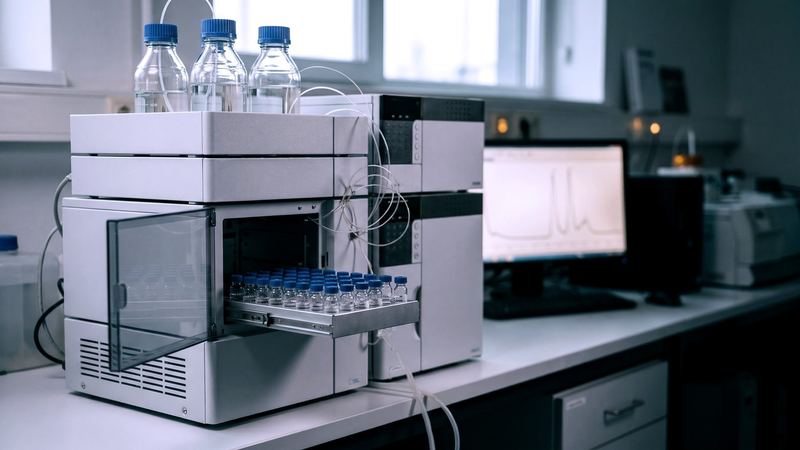
The certificate reports purity by reversed-phase HPLC as main peak area percent. For study work the profile matters as much as the headline figure. Deletion sequences, incomplete deprotection products, oxidized methionine and deamidated asparagine each elute as separate peaks under a well-developed gradient. Ask for the method conditions when a result will be compared with in-house data. The HPLC purity guide explains why two methods can give two figures for one lot.
Net peptide content and salt form
A lyophilized peptide is a salt that also holds water. Peptide content gives the mass fraction that is peptide. Concentrations in a study report should be based on net peptide, with the correction and the lot number recorded. The counter-ion is stated on the certificate. Trifluoroacetate remains from preparative HPLC unless it is exchanged, usually for acetate. Residual trifluoroacetate can affect some cell-based readouts, so many protocols specify the salt form in advance.
Endotoxin and sterility
Endotoxin by LAL and sterility by USP <71> are reported where relevant to the product. Endotoxin is a common confounder in immune cell assays and in animal models. Check that the lot has a reported result before a study starts, because a result cannot be assumed from another lot. The endotoxin and sterility testing guide explains both methods and what a sample-based sterility result can and cannot show.
Lot continuity
Lot-to-lot differences in purity, content and moisture are small but real. One lot per study removes them from the data set. Where a program outlasts a lot, plan the change, run both lots side by side and file both certificates.
The lawful route for CROs and biotech companies
Research-grade product is for laboratory research by verified institutions; not for human or veterinary use. For a CRO or a biotech company, that sets three limits.
- Non-clinical use only. The material is for in vitro work, analytical work and non-clinical laboratory studies conducted under the company's own approvals. It is not for use in clinical studies in people.
- Not a pharmaceutical grade. Research grade and pharmaceutical grade are made and released under different systems. The guide to research grade versus pharmaceutical grade sets out the differences. Regulated studies have their own test article characterization rules, and the study director decides what extra work is needed.
- Local compliance. The company confirms that it may hold and use each compound under national law, including any controlled substance or import rules.
Outside the United States, we ship only where a lawful route exists for the product and the buyer, normally through a licensed importer in the destination country. We confirm the route in writing before taking an order. Supply is worldwide on that basis. Every country is assessed on request, and where a market restricts a product class the route is assessed case by case. As of November 2026, buyers should confirm import requirements with their regulator or counsel.
How CRO and biotech accounts work
The path is apply, business verification, quote, order. There are no public prices.
| Order value | Price band | Typical use |
|---|---|---|
| Under US$10,000 | First band | Evaluation order of stock-list items from US$2,500; single studies and method development |
| US$10,000 to US$20,000 | Second band | A first made-to-order study quantity, from US$10,000 |
| US$20,000 to US$30,000 | Third band | Multi-study supply from one lot |
| US$30,000 and over | Lowest price | Supply program: reserved lots and a forward schedule for long projects |
Every order is prepaid by bank wire or ACH. Stock-list items leave in 2 to 5 business days, and most product is made to order in about 3 weeks. Per-item volume breaks apply at 50, 150, 300 and 500 kits, where one kit is 10 vials, and a reached level is kept on later orders of that item.
Every origin option is available. Sponsors that require a named domestic synthesis site can specify the USA-Synthesized Line, whose lot origin file names the synthesis site and the fill-and-finish site. US-Finished lots use an active made outside the United States, with the source country disclosed, and are filled, freeze-dried, finished and tested in the United States. The Standard Line is made and finished outside the United States, states its origin per lot and costs less.
What we need from a CRO or biotech company at application
| Item | Why we ask |
|---|---|
| Legal entity name, registration number and registered address | To verify the business |
| Laboratory site address for delivery | To confirm delivery to a working laboratory |
| Scientific contact and purchasing contact, with company email addresses | To route technical and commercial questions |
| Compounds, format, quantity and any salt form requirement | To quote the right lot |
| Whether single-lot supply is required, and the study period | To allocate from one lot |
| Statement of intended non-clinical laboratory use | To confirm the product class fits the work |
| Importer details or import authorization, outside the United States | To confirm the route in writing |
Submit these on the application page. Technical questions about a specific lot can be sent to accounts@internationalwholesalepeptides.com with the lot number.
Frequently asked questions
Can a CRO order on behalf of a sponsor?
Yes. The CRO applies as the buyer and is verified as a business. The quote, the lot documents and the shipment go to the CRO's laboratory. If the sponsor needs copies of the certificate, the CRO can share them, and the sponsor can check the lot number online.
Can your research-grade peptides be used in a clinical trial?
No. Research-grade product is for laboratory research by verified institutions; not for human or veterinary use. It is not made as an investigational medicinal product. Material for use in people must come through a pharmaceutical supply route that the sponsor qualifies under the applicable clinical trial rules.
How do you support lot consistency across a study?
A study quantity can be quoted and shipped from one lot, so the whole study runs on one certificate. Accounts in the top price band can agree a supply program with reserved lots and a forward schedule. When a lot change cannot be avoided, both certificates are available for a bridging comparison.
Do you report counter-ion and peptide content?
Yes. The certificate states the salt form and reports peptide content with the method used. Together they let an analyst correct weighed amounts to net peptide and judge whether the counter-ion suits the test system. Trifluoroacetate and acetate salts differ in both respects.
Can a biotech company buy bulk powder instead of vials?
Bulk powder is available to companies with a suitable facility, by quote. It suits formulation development, analytical method work and reference use where vial fills are too small. It is supplied with a certificate of analysis for the lot and is not a finished sterile product.
What is the minimum order for a CRO?
A one-time evaluation order of stock-list items starts from US$2,500. A first order of made-to-order product starts from US$10,000. Orders are prepaid by bank wire or ACH. Per-item volume breaks apply at 50, 150, 300 and 500 kits, where one kit is 10 vials. Stock-list items leave in 2 to 5 business days after verification and route confirmation.
Related pages
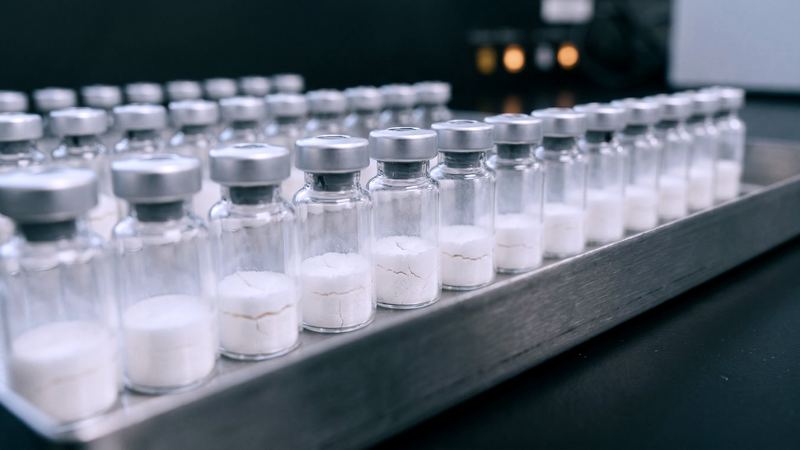 Lyophilized peptide vials wholesaleInternational Wholesale Peptides sells lyophilized peptide vials wholesale to verified trade buyers in kits of 10 vials. Each lot carries a certificate of analysis…
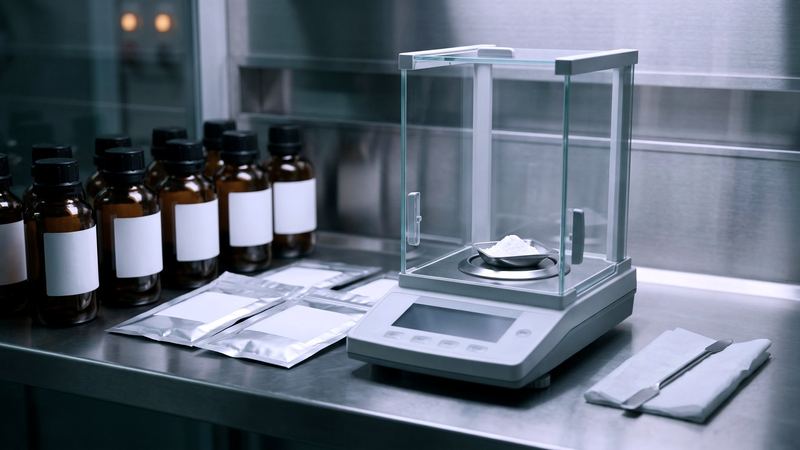 Bulk peptide API powderInternational Wholesale Peptides supplies bulk peptide API powder to licensed pharmacies and licensed manufacturers. Each lot carries a certificate of analysis reporting identity by…Peptide HPLC purity explainedPeptide HPLC purity is the area of the target peptide peak divided by the total area of all integrated peaks in a reversed-phase chromatogram,…
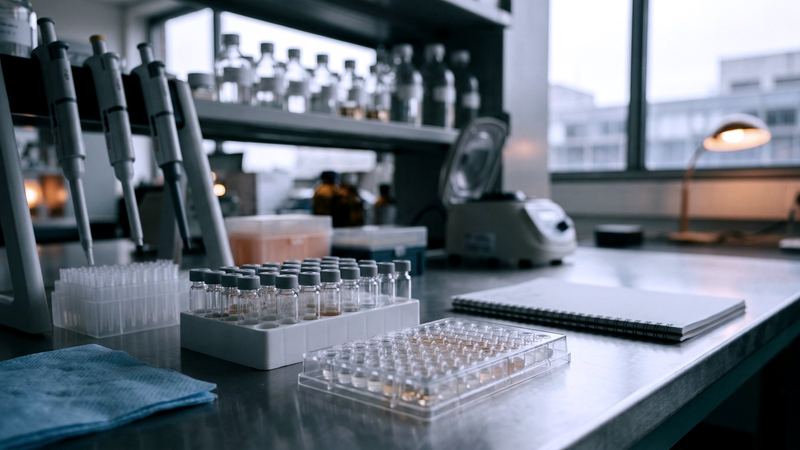 Research peptide supplier for laboratories and institutionsInternational Wholesale Peptides is a research peptide supplier for laboratories at verified institutions. Research-grade peptides ship as lyophilized vials in kits of 10, each…