Peptide supplier for hair clinics and salons
Short answerA hair clinic or salon can apply to International Wholesale Peptides today. It can buy hair and scalp cosmetics direct, on a trade label or its own. A clinic with prescribers can have its licensed pharmacy or importer hold the account, with the clinic named on the order, and get the route in writing.
- Buy direct today
- Hair and scalp cosmetics; cosmetic peptide actives
- Product for patients
- Your licensed pharmacy or importer holds the account, with the clinic named on the order
- Route
- Confirmed in writing for your state or country
- May a hair clinic or salon apply
- Yes
- Evaluation order
- Stock-list items from US$2,500, once per account
- Own brand
- Typically from 250 units; 4 to 6 weeks from approved artwork
International Wholesale Peptides (IWP) is a peptide supplier for hair clinics and salons that starts with what the buyer can do today. A clinic or salon can buy hair and scalp cosmetics direct, on our trade label or its own. A clinic with prescribers can have its licensed pharmacy or importer hold the account, with the clinic named on the order. We put the route in writing. Hair clinics and salons may apply.
What a hair clinic or salon can do today
A hair clinic, trichology practice or salon may apply for a trade account. Three things are open now, in this order.
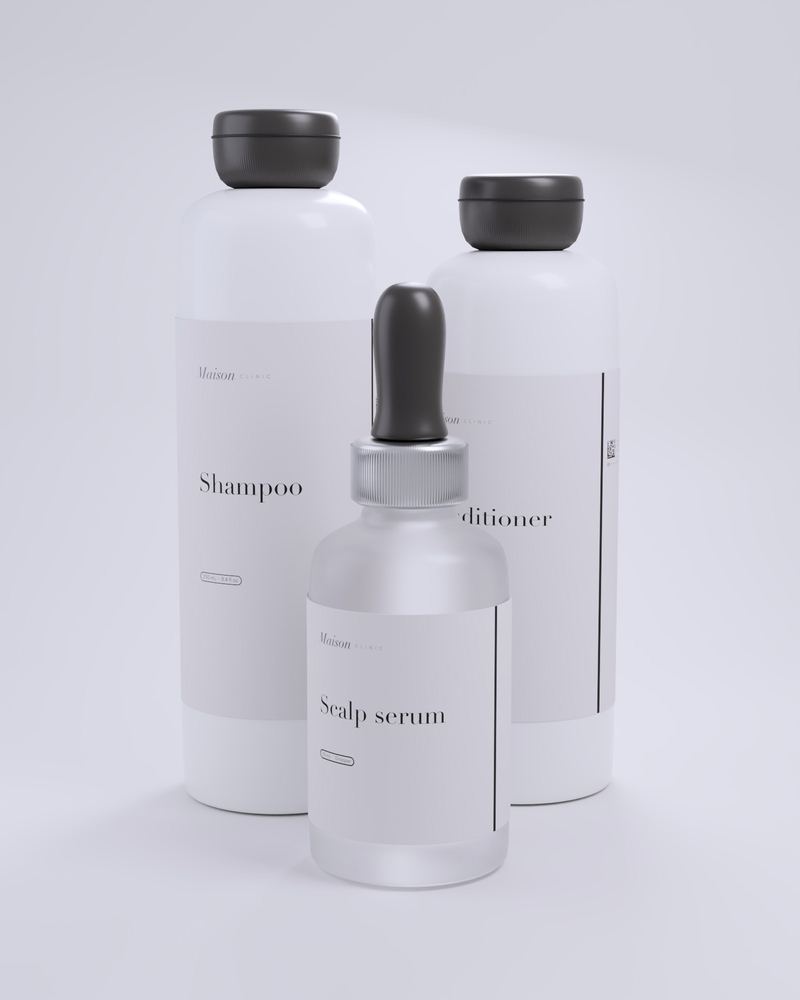
- Buy non-medicine goods direct. Finished hair and scalp cosmetics, including shampoos, conditioners, scalp serums, tonics and masks, and cosmetic peptide actives, on our trade label or your own. See the hair and scalp range. They ship to the registered business address with a certificate of analysis for the active and an origin statement per lot.
- Have your licensed pharmacy or importer hold the account, with the clinic named on the order. The licensed party buys, receives the goods and keeps the lot documents for anything that is a medicine in your market. The order names the clinic it is for, so both sides work from the same lot number, certificate and origin statement.
- Get the route in writing. Send your state or country and the product class. We reply in writing with the licensed party the route requires and the documents that travel with each lot.
Start on the application page and say which of the three you need. The page on how a trade account works shows what an approved account receives.

Who this page is for
This page is for owners and managers of hair restoration clinics, trichology practices, scalp care studios and hair salons, and for salon groups and distributors of professional hair products. It is also for the physician at a transplant clinic who wants to know where the cosmetic line ends.
What a hair clinic or salon can buy
| Product class | Typical pack | Documents | Route |
|---|---|---|---|
| Finished topical hair and scalp cosmetics, stock label | Dropper bottles and pump bottles in cases; professional sizes by quote | Certificate of analysis for the peptide active, ingredient list by INCI name, origin statement | Direct, as a cosmetic |
| The same under the clinic's or salon's own label | Bottles with the buyer's label | As above, plus approved artwork record | Direct; minimum stated on the quote, typically 250 units |
| Cosmetic peptide actives | Sealed containers of powder | Certificate of analysis, INCI name, salt form, peptide content | Direct, shipped to the brand's contract manufacturer |
| Patient-use product | Dispensed by a pharmacy | Pharmacy records | Through your licensed pharmacy or importer, which holds the account with the clinic named on the order |
Ingredient details are on the GHK-Cu compound page and the cosmetic peptide actives page.
The lawful route for a hair clinic or salon
This summary is as of November 2026 and is not legal advice.
Hair is the product category where the line between a cosmetic and a drug is drawn most explicitly, so the claims matter more than the formula.
| Statement | Category in the United States |
|---|---|
| Cleanses, conditions or moisturizes hair and scalp | Cosmetic |
| Hair looks thicker, fuller or shinier | Cosmetic |
| Grows hair, regrows hair or prevents hair loss | Drug. An over-the-counter product for external use with these claims is treated as a new drug under 21 CFR 310.527 |
| Addresses a scalp disease | Drug |
In the United States, cosmetics fall under the Federal Food, Drug, and Cosmetic Act as amended by MoCRA, with product listing and safety substantiation by the responsible person named on the label. In the European Union, Regulation (EC) 1223/2009 requires a Responsible Person, a product information file and notification, and Regulation (EU) No 655/2013 sets common criteria for claims. Other countries have their own notification or registration rules, usually with a local importer.
Claims are made in more places than the label. A clinic's consultation script, before and after photographs, treatment menu and social posts all count. A cosmetic sold inside a medical clinic is still a cosmetic only if it is presented as one.
Outside the United States we ship where a lawful route exists and confirm it in writing. Supply is worldwide on that basis. Every country is assessed on request, and where a market restricts a product class the route is assessed case by case.
Where the cosmetic line ends in a clinic
Two requests come up at hair clinics that fall outside cosmetics. The first is product for use with procedures that breach the skin. The second is product for patients after surgery. Both are clinical uses. A cosmetic is intended for intact skin, and the physician carries the decision on anything else. Product for use in patients follows the route on the clinics page: a licensed pharmacy on prescription in the United States, or a licensed importer elsewhere. The product class, not the buyer's wish, decides the route.
How hair clinics and salons buy
The two halves of this buyer type purchase differently.
| Buyer | Who decides | How they buy | What they ask a supplier |
|---|---|---|---|
| Hair restoration clinic | Physician owner or clinic director | A small take-home range sold at consultation and follow-up visits | Ingredient list, the certificate, what may be said to patients |
| Trichology or scalp studio | Owner | Treatment-room sizes plus retail | Professional pack sizes, shelf life after opening |
| Independent salon | Owner or salon manager | Through a professional distributor's sales consultant; direct accounts for a point of difference | Opening order size, retail margin, staff education material |
| Salon group or franchise | Head office buyer or education director | A core range mandated for all sites, often own brand | Private label process, consistent supply across sites |
| Professional hair distributor | Category buyer | Stock for resale to salons | Trade account with customer registration |
Salons separate treatment-room product, used by staff during a service, from retail product sold to the client. In the EU, products intended for professional use carry their own labeling and safety assessment considerations. Ask for professional sizes on the quote instead of decanting retail packs, because repacking makes the salon responsible for the repacked product.
Staff education is the other recurring request. We provide factual ingredient information: what the peptide is, its INCI name, its peptide content and its lot documents. We do not provide performance claims, and a salon should not let stylists improvise them. A certificate for an ingredient does not substantiate a claim for a finished product.
Order pattern and accounts
A clinic or salon typically opens with three to five items and reorders every four to eight weeks. A one-time evaluation order of stock-list items starts from US$2,500, and a first order of made-to-order product starts from US$10,000. Orders are prepaid by bank wire or ACH. Stock-list items leave in 2 to 5 business days. A single salon may find that order large; salons in that position often buy from a distributor that holds an account. A distributor of professional hair products registers its customers, and a direct enquiry from a registered customer is routed back to that distributor for 12 months. Own-label goods have a minimum stated on the quote, typically 250 units for cosmetics, and a first own-label order takes 4 to 6 weeks from approved artwork. The private label page explains the label options, and the page for cosmetic brands sets out what the brand owner must arrange.

What we need at application
| Item | Why we ask |
|---|---|
| Legal entity name, registration number and address | To verify the business |
| Establishment or facility license, where one is issued | To confirm a licensed clinic or salon |
| Type of business and number of locations | To quote pack sizes and plan shipments |
| Products wanted: finished goods, actives or own brand, and the expected value of a typical order | To quote the right order band |
| Countries of sale | To confirm the route in writing |
| For own brand: brand name, trademark status and the party named on the label | To plan artwork and identify the responsible person |
| Confirmation that products will be sold and used as topical cosmetics | To keep the account within its product class |
Apply through the application page. Med spas with a hair service should also read the page for med spas and aesthetic clinics. All buyer types are on the buyers hub.
Research-grade product
Research-grade product is supplied to verified research institutions; see the page for research institutions.
Frequently asked questions
What can a hair clinic buy from IWP?
A hair clinic or salon may apply and buy topical hair and scalp cosmetics direct: shampoos, conditioners, scalp serums, tonics and masks, plus cosmetic peptide actives such as copper tripeptide-1 for its own brand. Each lot ships with a certificate of analysis. A clinic with prescribers can also have its licensed pharmacy hold an account.
Can a scalp serum be sold with hair growth claims?
Not as a cosmetic in the United States. Under 21 CFR 310.527, an over-the-counter product for external use labeled or promoted as a hair grower or for hair loss prevention is treated as a new drug. Cosmetic claims describe appearance, such as hair that looks fuller.
Can a cosmetic scalp product be used with microneedling or after a transplant procedure?
We sell cosmetics for application to intact skin. Use with a procedure that breaches the skin, or on skin that has not closed after surgery, is outside cosmetic use and may bring the product under drug or device rules. The clinic's physician should decide and confirm with counsel.
Which peptide actives are used in hair and scalp cosmetics?
Copper tripeptide-1, known in the trade as GHK-Cu, is the most requested. Acetylated and palmitoylated cosmetic peptides are also used in scalp formulations. They are sold by INCI name as cosmetic ingredients. We describe what each ingredient is and do not supply efficacy claims.
Can a salon buy without a medical license?
Yes. Cosmetics need no medical license to buy or sell. We verify the salon as a registered business and ask for its cosmetology establishment license where the state or country issues one. Individuals and booth renters without a registered business cannot open an account.
Can a hair transplant clinic get peptides for patients through IWP?
Through its licensed pharmacy in the United States, or a licensed importer elsewhere. That party holds the account with us and the clinic is named on the order. We confirm the route for the clinic's state or country in writing. The clinic buys its hair and scalp cosmetics direct in the meantime.
Related pages
 Cosmetic peptide supplier for skincare brandsInternational Wholesale Peptides is a trade-only cosmetic peptide supplier. It sells topical peptide actives such as copper tripeptide-1, palmitoyl pentapeptide-4, acetyl hexapeptide-8 and acetyl…
 GHK-Cu wholesale specification sheetGHK-Cu wholesale supply from International Wholesale Peptides is trade only. It is supplied as research-grade lyophilized vials and as cosmetic active powder to verified…Cosmetic peptide actives wholesaleInternational Wholesale Peptides sells cosmetic peptide actives wholesale to brands, contract manufacturers and ingredient distributors. Actives such as copper tripeptide-1, palmitoyl pentapeptide-4, acetyl hexapeptide-8…
 Private label peptides for verified brandsPrivate label peptides are finished goods produced under a brand's own label. International Wholesale Peptides sets the minimum by format on the quote, typically…