Peptide API supplier for compounding pharmacies
Short answerInternational Wholesale Peptides is a peptide API supplier for compounding pharmacies that hold a current license. It sells bulk API powder only, with a certificate of analysis per lot and a stated manufacturing origin. It does not sell finished compounded drugs, and each pharmacy must complete its own supplier qualification.
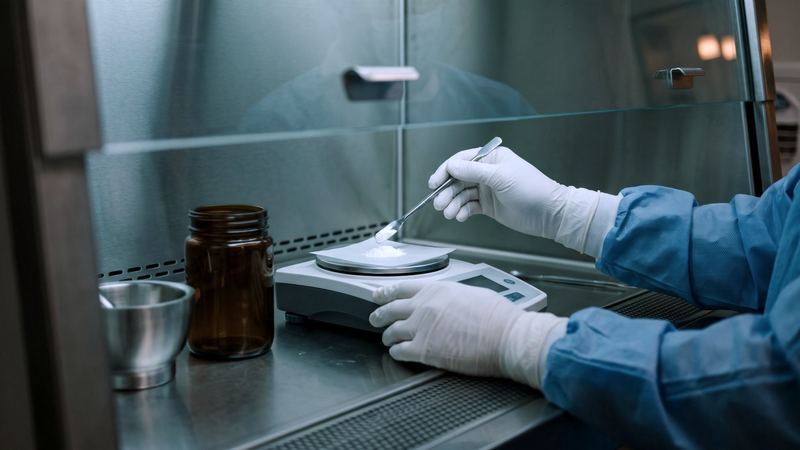
- What we sell
- Bulk peptide API powder
- What we do not sell
- Finished compounded drugs
- Buyers
- Licensed pharmacies and licensed manufacturers
- Per-lot tests
- Identity (MS), purity (HPLC), peptide content
- Conditional tests
- Endotoxin and sterility, where relevant
- Origin
- Stated per lot. Synthesis site named for USA-Synthesized lots
International Wholesale Peptides (IWP) is a peptide API supplier for compounding pharmacies that hold a current license. We sell bulk API powder only. We do not sell finished compounded drugs. Each lot carries a certificate of analysis that names the testing laboratory, and each pharmacy must carry out its own supplier qualification before use.
Who this page is for
This page is for pharmacists in charge, quality managers and purchasing staff at licensed compounding pharmacies, and for licensed manufacturers that buy peptide API. It is written for the United States first, with a note on other countries. It is not for clinics or prescribers, who should read the page for clinics.
What a peptide API supplier for compounding pharmacies provides
| Product class | Typical pack | Documents with each lot |
|---|---|---|
| Bulk API powder, USA-Synthesized (active made in the United States; finished and tested in the United States) | Sealed containers, pack size set on the quote | Certificate of analysis, lot origin file naming the synthesis site, imported inputs disclosure |
| Bulk API powder, US-Finished (active made outside the United States, source country disclosed; finished and tested in the United States) | Sealed containers, pack size set on the quote | Certificate of analysis, origin statement naming the source country of the active and the finishing site |
| Bulk API powder, Standard (made and finished outside the United States) | Sealed containers, pack size set on the quote | Certificate of analysis, origin statement naming where the lot was made |
Research-grade vials are not offered to pharmacies for compounding. Format details are on the bulk API powder page.
What the certificate reports
- Identity by mass spectrometry, observed mass against theoretical mass.
- Purity by reversed-phase HPLC, main peak area percent against a limit.
- Peptide content, with the method named. This is the figure a pharmacist uses to correct a weighed amount of powder to the amount of peptide. Purity alone does not allow that correction.
- Salt form. Acetate and trifluoroacetate salts have different peptide content and are not interchangeable in a formula without recalculation.
- Bacterial endotoxin by LAL, where relevant, in endotoxin units per milligram.
- Sterility by USP <71>, where relevant.
- Testing laboratory, by name.
Every field is explained on the certificate of analysis page, and the certificate can be checked against the lot number through lot lookup.
The lawful route for a US compounding pharmacy
The statements below are a summary as of November 2026. They are not legal advice. A pharmacy must confirm its own position with counsel, FDA guidance and its state board.
503A and 503B are separate. A 503A pharmacy compounds for identified individual patients on a valid prescription. A 503B outsourcing facility is a separate category with its own registration and manufacturing requirements. The bulk drug substances each may use are governed by different provisions.
The draft federal policy. An HHS draft enforcement-discretion policy was published on 30 October 2026. It concerns 503A compounding of six peptides: BPC-157, TB-500, KPV, MOTS-c, Semax and Epitalon. Among other conditions, it expects the API to come from an FDA-registered manufacturer and to be accompanied by a certificate of analysis that identifies the manufacturing site.
What the draft is not. It is a draft. It is not an approval of any of these substances. It does not cover 503B outsourcing facilities. Its conditions may change before it is finalized, and it may not be finalized.
Registration is not approval. FDA establishment registration is a listing. It does not approve a site, and it does not by itself prove compliance with current good manufacturing practice.
State law still applies. State boards of pharmacy set their own rules. Several have said that research-labeled product cannot be used in patient care.
The 503A and 503B peptide sourcing guide discusses these points with sources.
Other countries
Outside the United States, peptide API moves only through the route the destination country allows, normally a licensed importer or a pharmacy holding the relevant authorization. We confirm the route in writing before taking an order. We supply worldwide wherever a lawful route exists for the product and the buyer. Every country is assessed on request, and where a market restricts a product class the route is assessed case by case and confirmed in writing.
Supplier qualification is the pharmacy's job
We supply documents. The pharmacy decides whether they are sufficient. A typical qualification file includes the following.
| Qualification step | What we can supply | What the pharmacy does |
|---|---|---|
| Identify the manufacturer | The manufacturing site named in the lot documents | Check the site in FDA's establishment registration database |
| Review the certificate | Certificate of analysis naming the testing laboratory | Compare results with the pharmacy's own specification |
| Confirm origin and custody | Origin statement, and a lot origin file for USA-Synthesized lots | Check that lot numbers and sites agree across documents |
| Test incoming material | Lot number and method information on request | Run identity and any other tests required by its procedures |
| Assess suitability for sterile compounding | Endotoxin and sterility results where reported | Apply USP <797> and its own release testing |
| Keep records | Lot documents and written route confirmation | File them with the compounding record for each batch |
The peptide API supplier checklist lists the questions to put to any supplier. For USA-Synthesized lots, the lot origin file names the synthesis site and the fill-and-finish site and discloses imported inputs.
How pharmacy accounts work
The path is apply, verification, quote, order. There are no public prices.
- Evaluation order: stock-list items from US$2,500, once per account.
- First production order: made-to-order product from US$10,000. Price is set by order value in four bands: under US$10,000; US$10,000 to US$20,000; US$20,000 to US$30,000; and US$30,000 and over, which carries the lowest price.
- Supply program: accounts in the top band can agree a forward schedule with reserved capacity and reserved lots.
Every order is prepaid by bank wire or ACH. Stock-list items leave in 2 to 5 business days, and most product is made to order in about 3 weeks. A reserved lot is useful to a pharmacy because each new API lot triggers receiving tests and a formula recalculation. Fewer lot changes mean fewer of both. Conditions are in the trade terms.

What we need from a pharmacy at application
| Item | Why we ask |
|---|---|
| Pharmacy legal name and registered address | To verify the business |
| State pharmacy license number and expiry date | To confirm a current license |
| Pharmacist in charge, with contact details | To have an accountable licensed contact |
| Whether the pharmacy operates under 503A, or is a registered 503B facility | To understand which requirements the buyer works under |
| API items and expected quantities | To quote by lot |
| Supplier qualification questionnaire, if the pharmacy uses one | To return the documents the pharmacy needs |
| Ship-to address matching the licensed premises | To deliver only to the licensed site |
Apply through the application page.
Frequently asked questions
Do you sell compounded peptide products to pharmacies?
No. We sell bulk API powder to licensed pharmacies and licensed manufacturers. We do not compound, and we do not sell finished compounded drugs, prefilled units or patient-labeled product. Compounding, sterilization, release testing and dispensing are carried out by the pharmacy under its own license.
What does the October 2026 HHS draft policy say about peptide compounding?
As of November 2026, a draft enforcement-discretion policy published on 30 October 2026 addresses 503A compounding of BPC-157, TB-500, KPV, MOTS-c, Semax and Epitalon. Among other conditions, it expects API from an FDA-registered manufacturer with a certificate of analysis identifying the manufacturing site. It is a draft, not an approval.
Does the draft policy apply to 503B outsourcing facilities?
No. The draft concerns compounding by 503A pharmacies for identified patients on prescription. It does not cover 503B outsourcing facilities, which are subject to separate requirements. Because it is a draft, its terms may change, and pharmacies should confirm their position with counsel and their state board.
Is an FDA-registered manufacturer the same as an FDA-approved one?
No. Establishment registration is a listing requirement. It is not an approval of the site or its products, and it does not by itself prove compliance with current good manufacturing practice. A pharmacy should check registration and then carry out its own qualification of the manufacturer and the supplier.
Can a pharmacy use research-grade vials for compounding?
No. Research-grade product is for laboratory research by verified institutions; not for human or veterinary use. As of November 2026, several state boards of pharmacy have said that research-labeled product cannot be used in patient care. Pharmacies are quoted bulk API powder only.
What will a pharmacy receive with each API lot?
A certificate of analysis that names the testing laboratory and reports identity, purity and peptide content, with endotoxin and sterility where relevant, plus an origin statement. USA-Synthesized lots include a lot origin file naming the synthesis site. The pharmacy should also test incoming material under its own procedures.
Is your bulk API powder sterile?
Bulk API powder should be handled as a non-sterile bulk substance unless the certificate for that lot reports a sterility result. Where endotoxin has been tested, the result and limit are shown. The pharmacy is responsible for sterilization and for release testing of anything it compounds.
Related pages
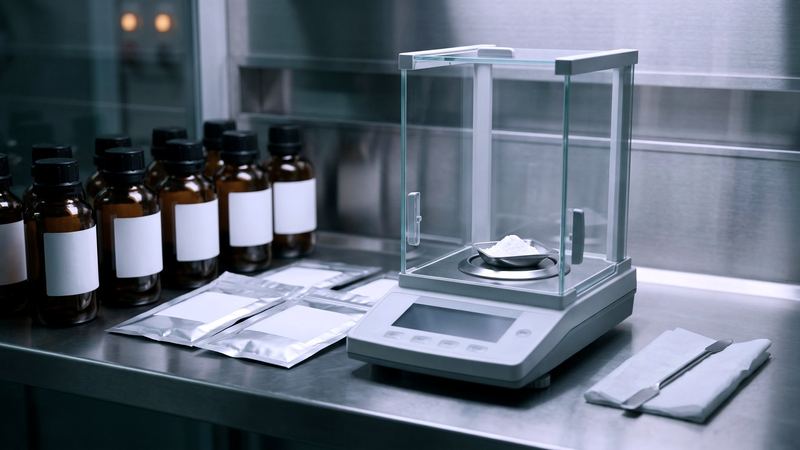 Bulk peptide API powderInternational Wholesale Peptides supplies bulk peptide API powder to licensed pharmacies and licensed manufacturers. Each lot carries a certificate of analysis reporting identity by…503A 503B peptide sourcing: what pharmacies need from an API supplierUnder section 503A, pharmacies compound for identified patients using bulk substances that meet statutory conditions. Section 503B outsourcing facilities use substances on FDA's 503B…Peptide API supplier checklist for pharmacies and manufacturersA peptide API supplier should provide the original manufacturer's identity and FDA establishment registration, evidence of cGMP manufacture under ICH Q7, a lot-specific certificate…
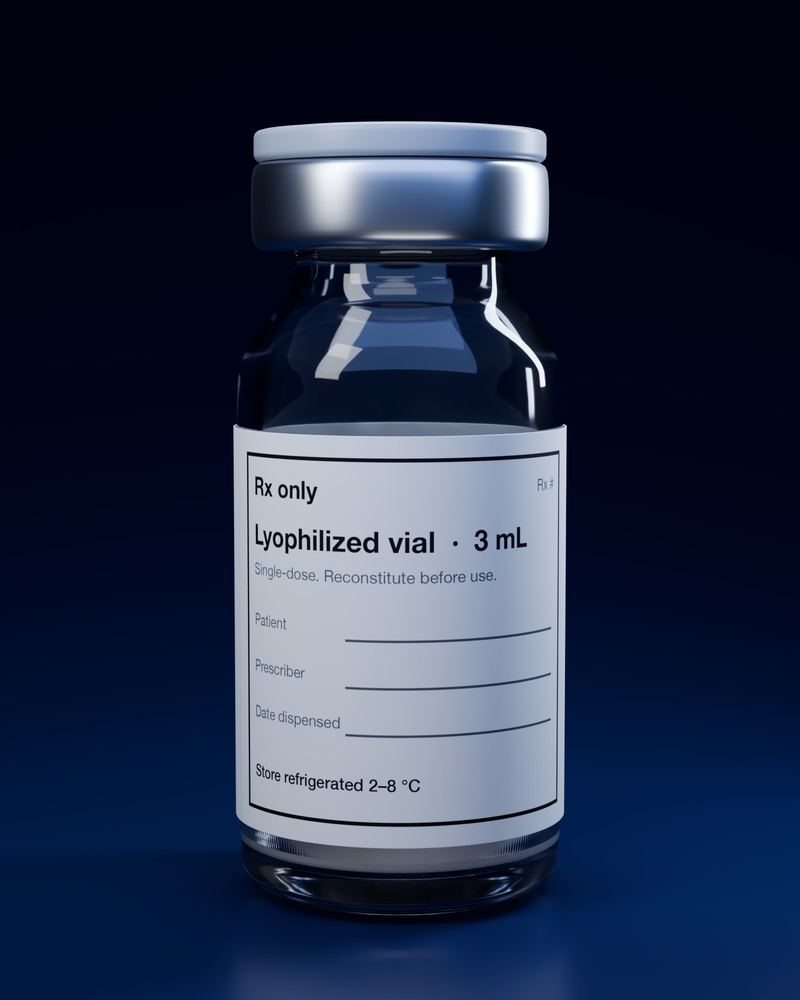 Wholesale peptides for clinics: how the lawful route worksA clinic can apply to International Wholesale Peptides today. It can buy cosmetic, hair, scalp and other non-medicine goods direct, have its licensed pharmacy…